
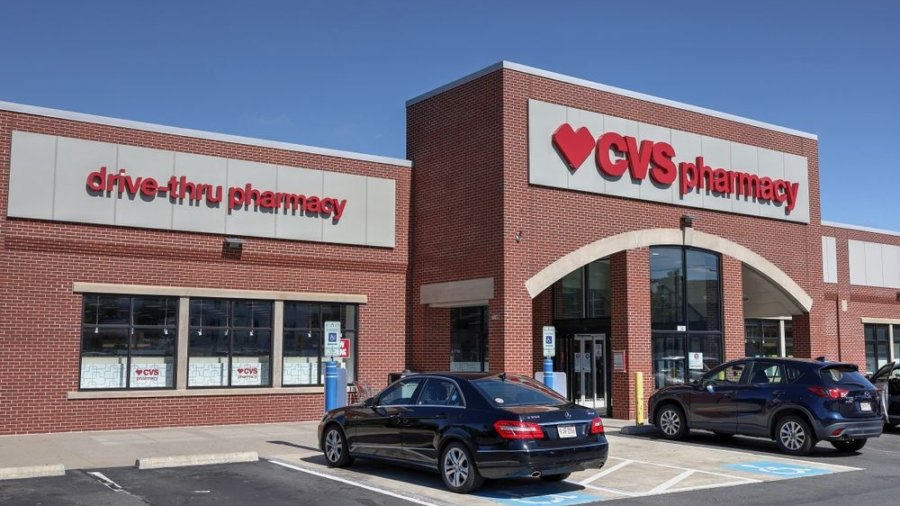
If your local CVS recently closed—or you’ve seen headlines about hundreds of shuttered locations—it’s easy to assume the company is in serious trouble. It isn’t.
CVS is closing stores, yes. But closing stores and going out of business are two very different things. This article breaks down what’s actually happening: how many stores are closing, why, what the financials look like, and what you should do if your location is affected.
CVS Is Not Going Out of Business
Let’s get the core fact on the table first. CVS Health is not bankrupt. It has not filed for bankruptcy protection. It is not shutting down as a company.
Even after closing hundreds of locations, CVS still operates more than 9,000 stores across the United States. That’s not a company on its way out—that’s one of the largest retail pharmacy networks in the country.
CEO Karen Lynch has publicly stated that the company is “performing really well” despite the closures. The closures are part of a deliberate, planned restructuring—not a sign of collapse.
The confusion is understandable. When a local store shuts down, it feels significant. And when regional news outlets publish closure lists, social media tends to amplify them with alarming headlines. But a company closing 270 stores out of 9,000-plus is a very different story than a company going under.
How Many CVS Stores Are Closing and When
The numbers here are confirmed—CVS has been transparent about them.
In 2021, CVS announced a multi-year plan to reduce its store count. Between 2022 and 2024, the company closed approximately 900 locations. In 2025, CVS plans to close an additional 270 to 271 stores. That brings the total to more than 1,170 closures across several years.
CVS put it plainly in a direct statement: “We closed 900 stores between 2022 and 2024, and are planning to close an additional 270 stores in 2025.”
Closures are spread across multiple states. They tend to concentrate on locations that overlap geographically with other CVS stores—areas where the company has more stores than it needs within a short distance of each other.
State-by-state closure lists for 2025 are available from outlets like Newsweek, The Independent, and others. Specific states including Indiana, Maryland, Texas, and New York have confirmed closures. If you want to know whether your store is on the list, those sources are the most reliable place to check.
Why CVS Is Closing These Stores
This is where the business logic matters. CVS describes the closures as part of an “enterprise-wide restructuring plan” designed to simplify the organization and cut costs. The company has identified a multi-year opportunity to save roughly $2 billion, and store closures are one piece of that.
Several factors are driving the decisions:
- Overlapping locations. In denser markets, CVS sometimes has multiple stores within a mile or two of each other. Closing one of them doesn’t eliminate service—it just reduces redundancy.
- Changing customer behavior. More people are using mail-order prescriptions and online pharmacy services. Foot traffic in traditional retail pharmacy has shifted, which affects the math on keeping certain locations open.
- A shift toward health-service hubs. CVS has been investing in locations that offer more than just a pharmacy—think MinuteClinic services, expanded health screenings, and integrated care. Smaller, underperforming stores don’t fit that model.
A simple analogy: imagine a regional restaurant chain that has three locations within a five-mile stretch. If one of them consistently underperforms and cannibalizes the others, closing it isn’t a sign of failure. It’s sensible management. CVS is doing the same thing at a larger scale.
It’s worth noting that CVS has cited multiple overlapping reasons for the closures—not just one. Anyone telling you it’s purely about crime, or purely about online competition, is oversimplifying it.
CVS’s Financial Position Right Now
If you want to know whether a company is actually in trouble, look at the numbers—not the headlines.
CVS reported full-year 2024 revenue of approximately $372.8 billion, up 4.2% from the prior year. Cash flow from operations in 2024 came in at around $9.1 billion. Q4 2024 revenue alone was roughly $97.7 billion, also up 4.2% year-over-year.
Those are not the numbers of a company circling the drain.
Looking ahead, CVS has issued adjusted earnings-per-share guidance for 2025 in the $5.75 to $6.00 range, signaling management expects the business to remain profitable through the restructuring period.
That said, it’s not all smooth sailing. CVS’s insurance unit has faced pressure from high medical costs, and the company recorded a significant goodwill impairment charge—approximately $5.7 billion—in its Health Care Delivery segment in 2025. Operating income has declined. These are real challenges that shouldn’t be dismissed.
But there’s a meaningful difference between “facing headwinds” and “going out of business.” CVS is dealing with the former, not the latter.
How This Compares to the Rest of the Industry
CVS isn’t the only pharmacy chain making these moves. Walgreens has also been closing stores in large numbers. In 2025, the two chains together are shutting hundreds of locations combined.
This tells you something important: the closures are not primarily a CVS-specific problem. They reflect broader shifts in how the pharmacy and drugstore sector operates.
Margins on front-of-store retail (think greeting cards, seasonal items, snacks) have been shrinking for years. Mail-order and digital prescription services have grown. Pharmacy benefit managers have put pressure on reimbursement rates. These forces are hitting the entire industry, and chains are adapting by reducing physical footprints.
For more context on how retail businesses navigate restructuring, Urban Biz Mag covers business strategy and industry trends worth keeping an eye on.
What Should You Do If Your CVS Is Closing
If your local CVS is on the closure list, here’s what to do without panicking.
- Transfer your prescriptions. CVS typically notifies customers before a store closes and makes the transfer process straightforward—either to another CVS location or to a pharmacy of your choice.
- Consider mail-order options. If the next nearest CVS or competitor is inconvenient, CVS’s mail-order pharmacy service may be a practical alternative for maintenance medications.
- Check what’s nearby. Independent pharmacies, Walgreens, Rite Aid, Walmart pharmacy, and grocery store pharmacies are options depending on your area.
- Act before the closing date. Don’t wait until the last week. Transfer prescriptions and ask about any outstanding rewards or records well in advance.
If you’re in an area where CVS is the only nearby pharmacy, that’s a more serious access issue—and it’s worth contacting your local health department or state pharmacy board to understand what options are available.
What to Actually Watch Going Forward
If you’re monitoring CVS as a business—whether you’re a customer, investor, or just curious—here’s what actually matters.
Watch CVS’s annual earnings reports and operating income trends, not just headlines about store counts. Look at whether the restructuring is producing the $2 billion in savings the company is targeting. Pay attention to how the insurance division performs, since that’s where some of the current financial pressure is concentrated.
Real signs of distress would include things like sustained operating losses, missed debt payments, credit rating downgrades, or bankruptcy filings. None of those are present right now. What you’re seeing is a large company reorganizing how it operates—something big businesses do regularly.
The Bottom Line
CVS is not going out of business. It’s closing more than 1,170 stores across several years as part of a planned, publicly explained cost-cutting and restructuring strategy. The company still operates over 9,000 locations and generated nearly $373 billion in revenue in 2024.
The closures are real and they do affect real people. If your pharmacy is shutting down, that’s genuinely inconvenient. But inconvenience and corporate collapse are not the same thing.
The next time you see a dramatic headline about CVS closures, look at the data before drawing conclusions. That habit—separating noise from signal—is useful whether you’re a customer, a business owner watching the retail space, or just someone trying to understand what’s actually going on.
Read Also: